

Insights
Explore the latest news, expert articles, and market outlooks to stay ahead of industry trends.
Newsroom
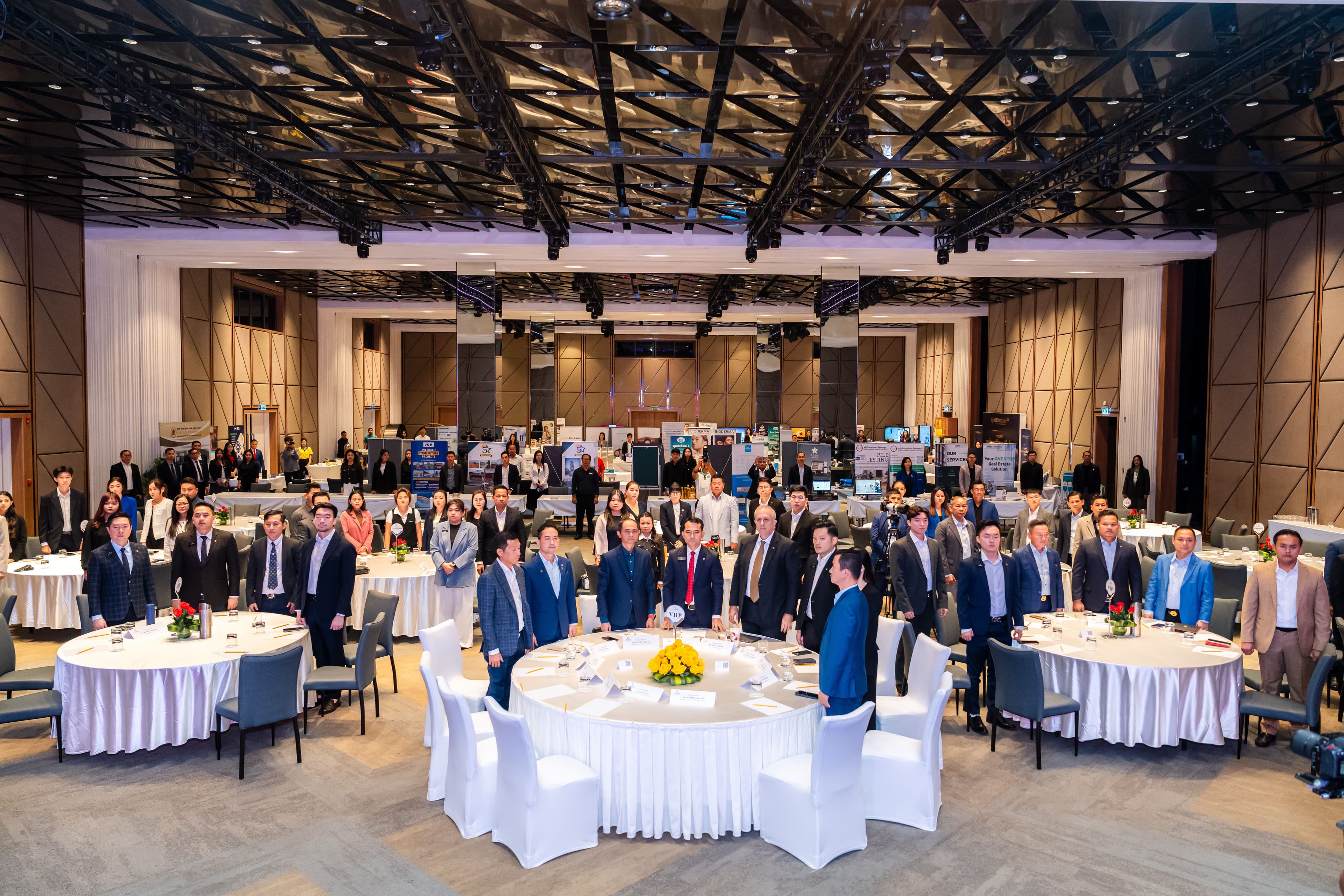
CorporateConnections Cambodia Annual Expo 2025: Construction, Business Services, Food & Beverage and Hospitality
Banjaran Asset Management (Cambodia) Plc. was honored to participate in the “CorporateConnections Cambodia Annual Expo 2025: Construction, Business Services, Food & Beverage and Hospitality” held on 28th November 2025. We were delighted to host our booth and engage with the many attendees who visited and took part in our activities. Your interest and participation truly made our presence at the event meaningful. Stay connected with us for more upcoming opportunities and events!

Let’s Talk Investment! Insights on Collective Investment Scheme!
Thank you to everyone who joined us on 21st November 2025 at ACLEDA Securities Plc.. Your questions, enthusiasm, and participation made the discussion on Collective Investment Schemes both engaging and meaningful. We appreciate the opportunity to share practical investment knowledge and help build financial confidence within the community. We’re excited to continue this learning journey with you in our upcoming December session. Stay tuned so you wouldn't miss the next one!

training session on "Promoting Financial Literacy Awareness of the Securities Sector" Part 2
Afternoon of November 12, 2025, representatives from Banjaran Asset Management (Cambodia) Plc. participated in a training session on "Promoting Financial Literacy Awareness of the Securities Sector" organized by the Securities and Exchange Regulator of Cambodia (SERC), in collaboration with The Westline School, (Santhormok Branch). During this training session, with the approval of the management of Banjaran Asset Management (Cambodia) Plc., Mr. Taing Hoy, Legal and Compliance Officer, delivered a presentation on "Personal Financial Planning During and After Graduation" guiding participants on how to effectively manage and plan their long-term financial savings. The training aimed to promote financial literacy among the students, encouraging effective saving habits and smart investment practices to help them plan for long-term financial stability.

training session on "Promoting Financial Literacy Awareness of the Securities Sector"
Afternoon of November 11, 2025, representatives from Banjaran Asset Management (Cambodia) Plc. participated in a training session on "Promoting Financial Literacy Awareness of the Securities Sector" organized by the Securities and Exchange Regulator of Cambodia (SERC), in collaboration with ACLEDA University of Business (AUB). During this training session, with the approval of the management of Banjaran Asset Management (Cambodia) Plc., Mr. Sok Chantola, Deputy Sales & Marketing Manager, delivered a presentation on "Personal Financial Planning During and After Graduation" guiding participants on how to effectively manage and plan their long-term financial savings. The training aimed to promote financial literacy among university students, encouraging effective saving habits and smart investment practices to help them plan for long-term financial stability.

Trust Forum 2025
Mr. Eric Loo, CEO and Executive Director of Banjaran Asset Management (Cambodia) Plc., was honored to participate in the Trust Forum 2025, held on October 31, 2025, at Sokha Phnom Penh Hotel. The event, themed “A Trust Business Platform and Legal Compliance,” provided an important platform for discussions surrounding family trusts, the strategic direction of Cambodia’s trust sector, and efforts to promote a robust and transparent trust business environment. Through his attendance, Mr. Eric expressed his appreciation for the opportunity to engage with key stakeholders and contribute to conversations that support the continued development of Cambodia’s trust industry.
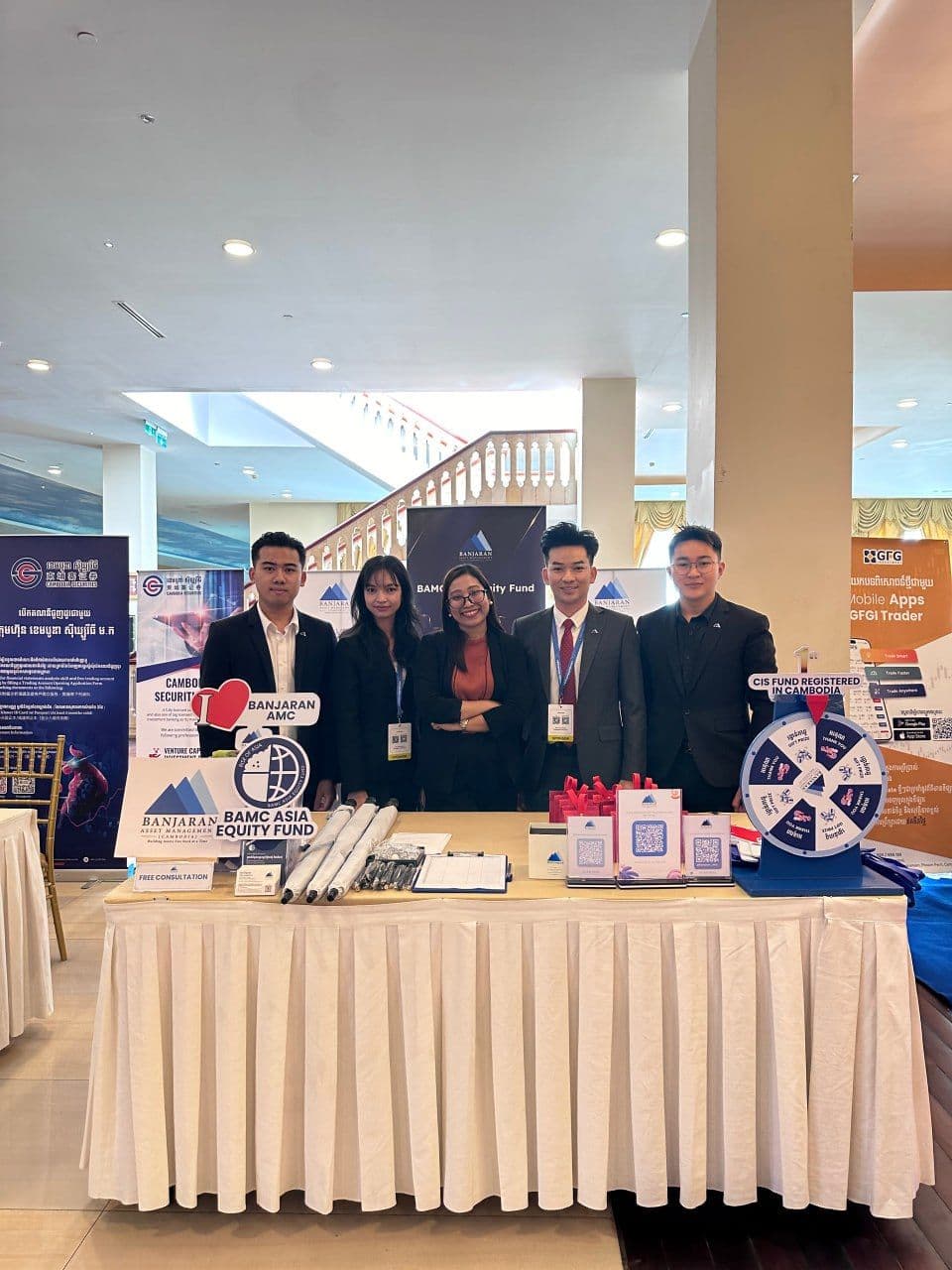
Banjaran AMC Joins the Annual Securities Conference 2025
Banjaran Asset Management (Cambodia) PLC. is honored to participate in the Annual Securities Conference 2025 held on October 7th! We were delighted to engage with participants who visited our booth throughout the event. The event was graced by the presence of H.E. Dr. AUN Pornmoniroth, Deputy Prime Minister, Minister of Economy and Finance, Chairman of the Non-Bank Financial Services Authority, and H.E. Sou Socheat, Delegate of the Royal Government in charge as Director-General of the Securities and Exchange Regulator of Cambodia (SERC).

Banjaran Asset Management (Cambodia) Recognized for Its Contribution to Cambodia’s Financial Market
We’re truly honored to be one of the sponsors of the Annual Securities Conference 2025! Held on October 7th, 2025 in the Annual Securities Conference 2025 at Sokha Hotel, Mr. Eric Loo, CEO & Executive Director of Banjaran Asset Management (Cambodia) Plc. received a certificate of recognition from H.E. Sou Socheat, Delegate of the Royal Government in charge as Director General of SERC in this remarkable event—organized by the SERC, brought together leaders and professionals across Cambodia’s securities sector to discuss Sustainability, Innovation, Inclusion, and Resilience. Banjaran Asset Management (Cambodia) PLC. is proud to support the continued growth and innovation of Cambodia’s financial market!

Mr. Aaron Ng Advocates Unit Trust Investment Strategies at the Annual Securities Conference 2025
Mr. Aaron Ng , CEO of Banjaran Asset Management Pte. Ltd. (Singapore), delivered an impactful presentation on “Investing in Unit Trust Funds in Cambodia: Diversity Your Investment And Minimize Your Risks” in the Annual Securities Conference 2025, organized by the Securities and Exchange Regulator of Cambodia (SERC), on October 7th, 2025, Sokha Hotel. Presided over by H.E. Dr. AUN Pornmoniroth , Deputy Prime Minister, Minister of Economy and Finance, and Chairman of the Non-Bank Financial Services Authority. Mr. Aaron session provided valuable perspectives on the growth potential of Cambodia’s capital market and the crucial role of unit trust funds in minimizing risks and diversifying investments

Earth Warriors Day 2025: Green Cambodia, Clean Future
Banjaran Asset Management (Cambodia) Plc. is proud to once again join Earth Warriors Day 2025 on 30th September in Koh Rong City, Sihanouk Province! As a sponsor of this meaningful cause, we are happy to committed to a Clean Cambodia, Clean Future — ensuring it remains a treasure for future generations. Together with fellow Earth Warriors, our team helped collect a total of 200 kg of waste, making a real impact in preserving the island’s natural beauty.
Market Outlook

2024 February, Market Outlook: Navigating Central Bank Strategies and Growth Opportunities in Asia
As we step into 2024, initial hopes for early interest rate cuts by the US Federal Reserve (FED) and the European Central Bank (ECB) are fading. Both central banks have downplayed the likelihood of reducing rates anytime soon, largely due to strong economic data released in recent months. The US economy continues to display resilience, with sustained expansion indicating that the FED must tread carefully. Lowering interest rates too soon could risk reigniting inflation, which the central bank is keen to avoid. At the same time, there are pockets of weakening growth within the economy, signaling the potential for a broader slowdown. This delicate balancing act places the FED in a challenging position, where policy mistakes could have significant consequences for both the US economy and global financial markets. In line with our earlier expectations, the Eurozone also faces similar inflationary pressures, with energy prices remaining persistently high. As a result, inflation remains sticky, preventing the ECB from easing rates. We foresee that both central banks will need to remain vigilant in navigating the complex dynamics of their respective economies, weighing inflation risks against the threat of economic slowdowns. Meanwhile, China's approach to monetary policy has taken a markedly different turn. The Chinese government recently lowered the 5-year loan prime rate by 25 basis points to 3.95%, signaling its determination to stimulate the economy and support the real estate sector. Under the “whitelist” initiative, commercial banks are encouraged to provide lending to property projects approved by local governments. These rapid, proactive measures underscore the government's commitment to front-loading stimulus to prevent weak sentiment in the housing market from deepening. We believe these policies will continue to evolve progressively, ensuring that the real estate sector stabilizes and recovers on a sustainable path. Signs of improvement are already emerging in China’s economy. Recent data on monetary aggregates indicate positive movement, and domestic travel and spending during the Lunar New Year suggest a rebound in consumer activity. On the global stage, China’s exports have grown for the second consecutive month in December 2023, further reinforcing the positive outlook for 2024. These rapid policy moves come as the State Council calls for "forceful measures" to restore confidence in both the economy and financial markets. Japan is also showing signs of strength, with the economy benefiting from long-anticipated corporate reforms. After decades of deflation, Japan appears to be breaking free from this prolonged economic phase. Reforms aimed at improving corporate profit margins and shareholder returns are finally coming to fruition, marking the end of the country's 30-year deflationary struggle. We believe these developments will unlock significant value for shareholders, creating opportunities for growth in the Japanese market. In summary, we remain optimistic about the prospects for the Asian markets, particularly as China and Japan implement aggressive economic measures. Conversely, we approach the US markets with caution, given the headwinds presented by inflationary pressures and an overconcentration in the technology sector. As we move forward, the balancing act between growth, inflation, and central bank policy will continue to shape the global market landscape, with Asia emerging as a bright spot for investors in 2024.

2024 January, Market Outlook - Navigating 2024 Amid Geopolitical Tensions and Economic Shifts
As we enter 2024, the global financial landscape is expected to shift focus from rising bond yields to interest rate stabilization and potential easing, particularly by the US Federal Reserve. After three years of tightening policies, we anticipate that both the US and Europe will experience sharply slower economic activity and increased unemployment. Europe, in particular, faces heightened risks of a prolonged recession. While interest rates in the US may hold steady for now, primarily due to persistent inflation pressures in areas like housing, rising geopolitical risks, such as recent airstrikes by the US and UK in response to Houthi rebel attacks, could lead to disruptions in global trade and shipping costs. Geopolitical Tensions: The US-China Factor Geopolitical developments, especially the enduring US-China tension, will be a critical driver in assessing global economic and financial market performances. The ongoing decoupling between the two economic giants, particularly in the semiconductor industry, presents both challenges and investment opportunities. We foresee increased innovation stemming from this geopolitical divide, providing promising prospects in certain sectors. The AI Revolution: A Long-Term Investment Opportunity The advent of generative artificial intelligence (AI), epitomized by innovations like ChatGPT, has sparked widespread interest in AI-driven technologies across industries. While the global addressable market for AI is still being estimated, we remain optimistic about its long-term growth potential. AI companies in our portfolio have already shown promise, and we continue to explore new investment opportunities in this space as AI applications expand. China's Economic Recovery: Stabilization Efforts China's economic recovery is gaining momentum, though the real estate sector remains a drag. However, recent fiscal and monetary policies have helped stabilize the situation. The Central Economic Work Conference's call for proactive fiscal expansion and real estate policy adjustments are positive signs for the market. China's central bank has also introduced liquidity-boosting measures, such as a 50 basis point reduction in the reserve requirement ratio and lower rates for loans to small firms. We believe these are incremental steps toward further stabilization, and we are optimistic about China's economic and market outlook in 2024. US Presidential Election: Market Implications This year’s US Presidential Election will undoubtedly shape economic policies and market directions, though we refrain from speculating on political outcomes. Instead, our focus remains on the data-driven economic and market trends, with a view that the US economy will increasingly look inward as the election approaches. Overall, we believe Asia, particularly China, remains a bright spot in the global economy, while the US and Europe may face slower growth and recessionary pressures. We remain vigilant in assessing geopolitical risks and continue to focus on sectors like AI and innovation, which offer long-term growth opportunities.

2023 December, Market Outlook: Asia Emerges as a Bright Spot Amid Global Economic Shifts
As 2023 draws to a close, the equity market has remained largely stable, with investors maintaining a preference for developed markets. While Asia Pacific markets have also posted positive returns, their performance still trails behind other regions despite notable improvements in economic data. This disparity is likely due to end-of-year dynamics such as tax-loss harvesting and institutional portfolio adjustments, or "window dressing," a common phenomenon seen during this period. Historically, such short-term volatility tends to carry over into January as fund managers rebalance their portfolios for year-end reporting. In developed markets, equity markets have experienced significant optimism since the Federal Reserve opted to hold interest rates steady for two consecutive meetings. This move has signaled to investors that the Fed's interest rate hike cycle may have peaked, fueling market euphoria. Additionally, concerns about a looming US recession have eased, with many economists now revising their forecasts toward a "soft landing" scenario, where economic activity slows but avoids a severe downturn. However, inflation in the US remains persistently above the Fed's 2% target, indicating that interest rates may stay elevated for an extended period. The future economic outlook remains uncertain, especially as housing inflation cools, but we believe that while the risk of a recession is still moderately high, it is unlikely to escalate into a systemic crisis. On the geopolitical front, China’s recent diplomatic overtures toward the US have been a positive development. Following Chinese President Xi Jinping's visit to the US last month, both nations have expressed a renewed commitment to peaceful cooperation. The resumption of military dialogue, after months of silence, signals China's intention to restore political ties with the US. Additionally, President Xi’s meeting with top US business leaders highlighted strong corporate support for continued engagement with China, despite ongoing geopolitical tensions. For instance, Mastercard's new joint venture with China's national transaction processor, NetsUnion Clearing, demonstrates the long-term business potential between the two countries, allowing Mastercard cardholders to enjoy seamless payments in China. Nevertheless, while these diplomatic efforts are encouraging, further reciprocal actions from the US government will be crucial to reducing geopolitical risks in the long term. With the US presidential elections on the horizon in late 2024, we expect China to remain a central theme in American political discourse, with both parties likely positioning the country as a major national security threat to garner electoral support. This political climate may perpetuate tensions, and as a result, we anticipate that geopolitical risks will remain elevated through 2024. Looking beyond the US, other significant elections, such as Taiwan's, will also play a key role in shaping geopolitical dynamics. As global security concerns intensify, we foresee a gradual restructuring of global supply chains, with capital and business operations increasingly shifting to countries deemed safer or more politically stable. This trend toward economic fragmentation will favor companies capable of maintaining market share and operational efficiency amid the reshoring of industries. In China, the recent Central Economic Work Conference concluded with the government setting a clear pro-growth agenda for 2024. Chinese policymakers are focusing on reviving confidence and stimulating economic growth through a series of supportive measures, including monetary, fiscal, and administrative interventions. These initiatives have been ramping up in intensity, and we anticipate additional measures in the coming months, particularly aimed at addressing risks in the real estate sector. Given these developments, we continue to see Asia, particularly China, as a bright spot for economic growth in the global economy. A lower interest rate environment, coupled with increased liquidity, should help alleviate financial pressures and reduce the debt burdens of companies and individuals. As the world economy navigates through geopolitical tensions and inflationary pressures, Asia remains well-positioned to drive global growth in the near term, making it a focal point for investors looking to capitalize on emerging market opportunities. In summary, while global economic conditions remain uncertain, Asia’s resilience, supported by pro-growth policies and improving economic indicators, offers a compelling investment case, even as geopolitical risks loom on the horizon.

2023 November, Market Outlook: Resilience, Stimulus, and Global Shifts
As we look ahead, the global market outlook remains shaped by several key developments. Despite geopolitical tensions and ongoing conflicts, such as the humanitarian crisis between Israel and Hamas, we expect limited broader economic impact due to stabilizing military presence and containment measures. The risk of a wider regional conflict appears low, preserving global market stability for the time being. US Economic Resilience and Slowdown Expectations In the US, resilience continues to be a dominant theme. While the Federal Reserve’s tightening measures have been in place since 2022, the financial system remains robust, supported by the aftereffects of COVID-19 stimulus and substantial fiscal spending by the US government. This liquidity, however, is expected to taper, with a corresponding economic slowdown projected over the medium term. Current forecasts suggest GDP growth of 0.7% in Q4 2023 and 0.3% in Q1 2024, indicating a likely deceleration in the coming quarters. China’s Recovery Gains Momentum China’s economy has begun to gain notable momentum, driven by improving retail sales, imports, and industrial output. The government has recently announced a significant RMB 1 trillion stimulus package to further bolster the recovery. However, investor sentiment remains cautious, keeping valuations suppressed relative to the US. We believe that this discrepancy is unsustainable and anticipate that over the medium term, valuations in China will close the gap, driven by stronger economic fundamentals. Japan’s Stimulus and Growth Prospects Japan is emerging as an intriguing opportunity as it moves away from years of deflation, with inflation now supported by demand. In response to weakening economic data, the Japanese government has introduced a US$ 110 billion stimulus package aimed at boosting private consumption. This should translate into economic growth in the near-to-medium term, further enhancing Japan’s market potential. Focus on Asia Amid Geopolitical Stability Asia remains our primary focus, especially in light of recent positive developments in China’s economic data and a decrease in US-China geopolitical tensions following the Biden-Xi meeting in San Francisco. Agreements between both countries signal a more stable relationship, reducing trade war fears and enhancing the region’s investment appeal. Overall, we maintain a cautiously optimistic view, focusing on opportunities in Asia while monitoring the evolving macroeconomic landscape.

2023 October, Market Outlook - Navigating China's Property Challenges, US Consumer Trends, and Asia's Resilient Growth Prospects
After a month since China relaxed its housing restrictions, overall home sales continued to be weak as consumer confidence has yet to be restored meaningfully. We believe that homebuyers in China will remain hesitant until the industry can contain the liquidity issues faced by property developers. This is a challenging issue to tackle as continued low sales will further worsen the developer’s cashflow position, which in turn will affect consumer confidence. The administration will likely arrest this situation by issuing liquidity for developers to complete their projects. Through government actions, we believe that they can bring the housing situation under control. Aside from the ongoing geopolitical tension between China and the US, we see the property crisis as the last hurdle for an overall recovery, given the broader improving economic data and earnings resilience from the leading firms that we cover. We are also encouraged by the Chinese government's continuous support for the economy through increased spending, hence a bigger budget deficit and more domestic investments. We are beginning to see early signs of the Chinese economy stabilizing. In early September, Huawei surprised the world by launching their Mate 60 Pro smartphone which carried a 7nm processor. Previously, the speculated limit for the Mate 60’s mass production using China’s existing technology was at 14nm. It is a clear win that China has produced this breakthrough internally despite continued semiconductor sanctions from the US. However, it remains to be seen whether China can mass produce such chips across multiple applications and further develop smaller nodes without access to cutting-edge machines. With the current geopolitical landscape, we maintain our view that the US-China rivalry will continue and possibly intensify over the long term. Retail sales in the US surprised in September, growing 3.7% yoy. This came at the cost of lower consumer savings, dropping to levels not seen since before the global financial crisis. We attribute the sudden economic pick-up to be due to pent-up demand over the summer holidays. Thus, we think that the current consumption growth is unsustainable over the long term. We have also been monitoring the employment situation in the US, where we observe weakening employment in higher value-added industries such as finance, professional services, and information technology. Therefore, we are wary of the short-term recovery in economic data. Our base case remains that the fundamental prospects remain brighter within Asia. While developed countries undergo a period of slowing growth, we believe that the effects are non-systemic and will not have a detrimental effect on the rest of the world.